


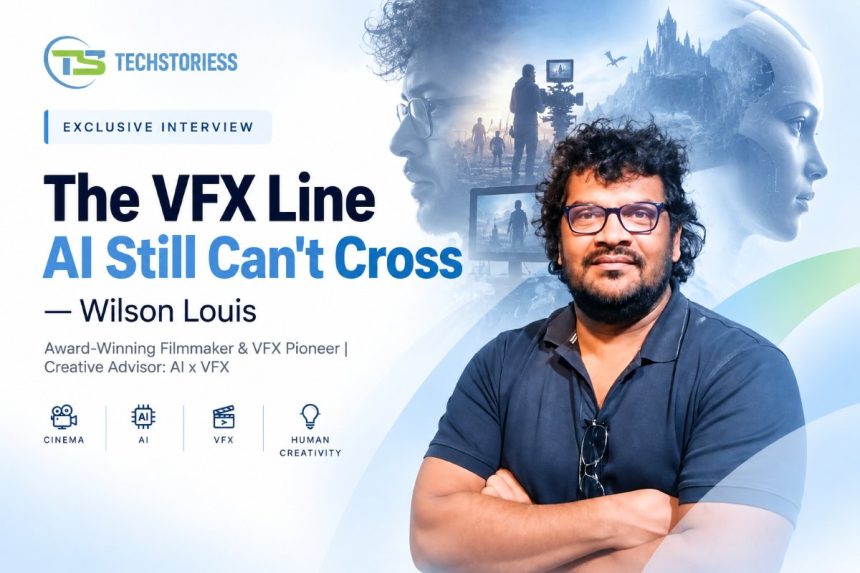
Some filmmakers chase scale. Wilson Louis chased daylight – literally. In 2010, when horror in India still meant darkness, jump-scares, and studio lighting tricks, Louis wrote and directed Kaalo – The Desert Witch, shot entirely under the punishing summer sun of Jaisalmer, with no shadows to hide behind. It became India’s first daylight creature-horror film, went on to cross 90 million+ views on YouTube, and won Best Film and Best Cinematography at the South African Horror Film Festival – a rare international honour for an Indian genre film at the time.
His debut thriller, Ho Sakta Hai, exploring the darker corners of black magic, was later archived in the Academy of Motion Picture Arts and Sciences’ Margaret Herrick Library, while Mallika continues to trend as a psychological thriller on Jio OTT. Before any of this, Louis spent years as Vice President and Head of Programming at Maya Entertainment, FutureWorks Studio, Glint Studio, and Inbox Pictures – building the VFX instincts he now applies to a genre most of Indian cinema still treats as B-grade.
Today, as Creative Advisor for projects blending AI and VFX, and founder of Metablockfilms, he sits at a rare intersection: someone who built horror by hand before AI existed, and is now deciding, shot by shot, what AI is actually allowed to touch….he sits at a rare intersection: someone who built horror by hand before AI existed, and is now deciding, shot by shot, what AI is actually allowed to touch.
We began by asking him exactly that.
Wilson Louis: “AI Can Generate a Storm in 10 Seconds, But It Can Never Generate 20 People Lifting a Fan Together”
On a project like Kaalo that hit 100M+ views, how much of the VFX pipeline today would you actually trust to AI tools versus five years ago – and where do you still insist on doing it by hand?
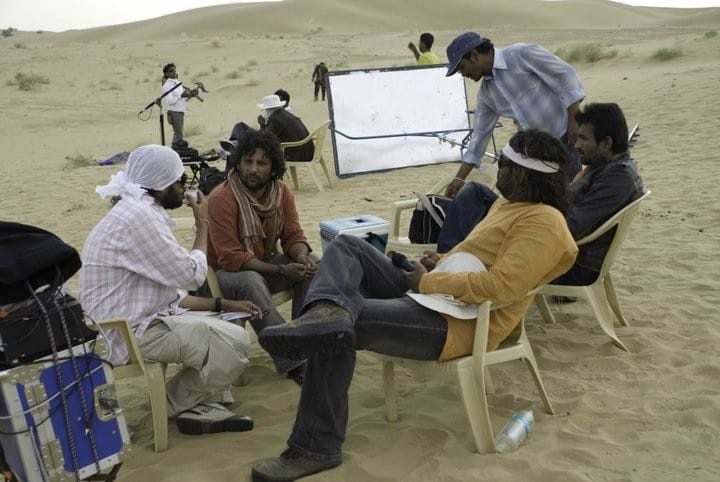
When I shot Kaalo, there was no AI. Zero. Whatever you see on screen – that desert witch of Kulbhata hunting in broad daylight – was made entirely by hand. Manual sculpting, manual texturing, manual roto, manual compositing, in the harsh Rajasthan sun. We had no darkness to hide behind, so every frame had to be perfect. That hand-made honesty is why the film still holds and has crossed 100M+ views.
Five years ago, I would have trusted AI for maybe 10-15% of a pipeline – only for quick concepts or references.
Today, on my current supernatural film which is a completely different film, I trust AI for about 60% – but I am very surgical about where.
Where I trust AI completely is from script to animatics. This is the biggest shift of my career. Before AI, yes, I have made quite a few storyboards through storyboard artists for several directors and production companies. It always took time and cost. You would write something, explain it, wait for days to see if visuals matched your imagination. But it helped a lot. With animatics, it was really happening.
Now, when I write a script, with AI tools for storyboarding, I can see it instantly. I can show my team and say, “This is what I meant. This is the feeling. This is the lens.” We are all on the same page from the very first day. There is less explaining, more creating. I am working with a small team of experts in AI and VFX and it’s fantastic – they help me blend the real with the imagined and design great compositions for filming.
Where I still insist on doing it by hand is the final 30-40%. The final creature sculpt, the hero skin texture, the dust interaction, the eye light, the final composite – and above all, the human performance. That real, human performance is still the heart of it. In fact, AI has made me value live action even more.
AI-generated VFX is getting faster and cheaper every month. Where’s the line for you between “this saves time” and “this makes the shot look cheap”?
In India, our audience has watched folklore since childhood. They know how a witch from Kulbhata should feel. If the physics is off, it looks cheap, no matter how fast it was.
That is my line for me.
If AI helps me generate 20 environment options, sky replacements, or composition tests in an afternoon for my current supernatural film – that saves time. That is smart. My art director and I can pick the right mood and move forward.
But if I use AI to generate the final scare shot and the physics is wrong, it looks cheap instantly. And this is what most AI tools don’t understand.
Because AI doesn’t understand folklore physics. It gave me a Hollywood bat-woman. But Kaalo is not a bat. She is a desert witch – her flight is heavy, angry, with dust sticking to her, like she is carrying the weight of 200 years of revenge from Kulbhata. The AI tool made her fly like a superhero – smooth, clean, weightless. It looked fake.
A chudail from Bengal doesn’t move like a vampire from Hollywood. A Munjya from Konkan doesn’t jump like Spider-Man. Every Indian spirit has its own physics – born from our soil, our heat, our stories.
And there is a second line – the human line. AI can generate a storm effect in 10 seconds today. But it can never generate the human moment behind creating that storm.
There was an instance on the shoot of Kaalo. I needed a storm effect and the fan was huge – to lift it needed 20 helping hands to move it. I asked the entire team to help, and within seconds the whole crew and cast – light boys, camera team, art team, actors – everyone came together and got it done. I was literally in tears. I loved it. That human aspect behind the screen is what the audience feels on screen.
That unity makes a shot feel expensive in emotion, not cheap in pixels. That’s the joy of making that remains.
For a film chasing record-breaking scale, does AI actually change your budget math – more shots for the same cost, or the same shots for less?
It changes the math completely, but not in the way people think on social media. It doesn’t just make things cheaper – it makes things bigger AND more soulful.
Earlier, when you wanted a record-breaking scale, your math was defensive. You would say – we will do only 10 VFX shots, but make them perfect, because every shot costs money, time, and render farm.
Today, on my current supernatural film, AI gives me what I call invisible scale.
Let me explain. If I need to extend a small practical temple into a massive forgotten valley, earlier I could afford to do it in only 5 shots. Now, with AI-assisted matte painting, environment generation and cleanup, my small AI + VFX team can do it in 50 shots for the cost of what 10 used to cost. So the entire film feels huge, not just 5 shots.
But – and this is very important for young filmmakers reading this on LinkedIn – I don’t pocket that saving. I reinvest it.
The money and time we save on environment extensions and roto cleanups, I put directly into the 3-4 hero supernatural moments. There we go fully hand-made. Hand sculpted, hand textured, hand composited, frame by frame.
So the answer is both: You get more shots for the same cost, which creates scale. And you get the same hero shots for better quality, which creates awe. That is how you chase scale today without losing your soul.
What’s an AI VFX tool you tried, expected to love, and ended up abandoning – and why didn’t it hold up on a real shoot?
Yes, I tried a very popular AI video generation tool for creature motion. On Instagram and YouTube demos, it looked magical. Prompt: “witch flying over desert” and you get a stunning 5-second clip. I expected to love it. I thought it would replace our entire animatics pipeline.
We tried it for a week on my current supernatural film and abandoned it for final shots.
Why? Three reasons that only a real shoot teaches you, not a demo.
First, consistency. In shot 1, the entity’s face was long. Shot 2, it became short. Shot 3, its wings changed colour, cloth changed. On a demo reel you don’t notice. On an editing table, with continuity, it is completely unusable.
Second, folklore physics. This is the same point again, but it is critical. It gave me a Hollywood bat-woman. Smooth, clean, weightless, superhero flight. But our Indian entities have weight. A desert witch carries dust, anger, 200 years of revenge from Kulbhata. She doesn’t fly clean. She carries history. The tool gave me a perfect look, but wrong feeling. It looked fake.
Third, controllability. On a real set, a director needs to say – “2 feet left, eye light warmer, dust a bit more, hold for half a second.” This AI tool gave “take it or leave it.” On a real set with changing light and actors, you need control.
So now we use such tools only for mood boards – to show the team “something like this, but heavier, more Indian.” For real work, we blend – we hand sculpt, scan it, use AI for texture variations, then hand-animate and hand-composite. If a tool can’t respect the story’s root and the shoot’s reality, I drop it. Technology must serve folklore, not replace it.
As benchmarks keep shifting format to format, do you think audiences can still tell AI-assisted VFX from traditional work, or has that gap already closed?
Technically, the gap has closed. On a phone screen, on YouTube, on OTT – a good AI-assisted shot and a good traditional shot look identical. You cannot tell which tool made it.
Emotionally, the gap is still wide open – and that is where the filmmaker lives and will always live.
When I was in VFX studios, new tools would always come in. It was progress, and it was acceptance. Even now, it is the same for AI. Adapting to new tools is nothing new for us in films. And we are all loving the whole process.
The audience never asked me, “Was Kaalo made in Maya or Houdini or AI?” They asked, “Did I feel scared for that small girl in the desert?” They have watched folklore since childhood. They know how a spirit should feel.
If AI-assisted VFX is used to save time on the story, the audience can tell instantly. It looks perfect but empty. Like a beautiful face with no emotion. They will scroll.
If AI-assisted VFX is used to enhance a real human performance, they cannot tell and they don’t care – because they felt something.
Let me tell you what AI can never generate – human emotion behind the camera that becomes emotion on camera.
There was a real bus accident on the shoot of Kaalo. The main bus we were shooting with met with an accident. For a moment I thought, gone, the film will be shelved. We were in the middle of nowhere in Rajasthan.
But though the cast who were in the bus were injured, they came on the shoot.
Aditya Srivastava had a dislocated shoulder. Paintalji had a bump visible on his head. The small girl – Shwini – came first. And then the rest of the actors came and joined, one by one. Injured, but present. It was overwhelming. It was unity to complete the film, come hell or high water. That’s the joy.
AI today can generate a perfect bus accident shot in 10 seconds. But it can never generate what happened after – actors coming to set with a dislocated shoulder and a bump on the head because they believed in the film.
Like that day when 20 people lifted that huge storm fan together in seconds – I was literally in tears. That human aspect, that love, that belief – the audience doesn’t see the fan, they feel that belief.
That is why I always say – AI has not replaced the joy of live action for me. It has made me value it even more.
My current supernatural film is built on this exact principle – working with a small team of AI and VFX experts to blend the real with the imagined and create great compositions, but keeping the heart human. That is what people on LinkedIn and Facebook, people who grew up with folklore, will always connect to.
Today I often get calls to be a Creative Advisor for films and projects that want to blend AI, VFX and real storytelling. I don’t take up everything, but I love sharing what I have learned when there was no AI, to today where I am shooting a different supernatural film with a small team of AI and VFX experts. I have just shared my honest thoughts and my journey in this interview – the tools keep changing, but the joy of making remains, and that real, human performance is still the heart of it.
Wrapping up
There’s a quiet irony in talking to a director who made India’s first daylight horror film about the future of AI in VFX – Louis has spent his whole career refusing to hide behind darkness, and that instinct hasn’t changed with the tools. He’ll take AI’s help getting from script to screen faster, from storyboard to team alignment, from a small crew’s ambition to a “record-breaking” scale on screen. But the moment a shot needs weight, history, or the specific ache of a Rajasthani desert witch who’s been angry for two hundred years – he pulls it back into human hands.
That’s really the throughline of everything he’s said here: AI can compress time, but it cannot compress belief. It can generate a storm in ten seconds, but not the twenty people who ran to lift a fan together, or the actors who showed up to set injured because they trusted the film enough to finish it anyway. For Louis, that’s not nostalgia talking – it’s a working principle. Use the machine for scale. Reserve the soul for people.
As Indian genre cinema keeps chasing bigger numbers and faster pipelines, Wilson Louis’s answer to “how much should AI do” isn’t a percentage. It’s a boundary – drawn, shot by shot, wherever the story stops being about pixels and starts being about people.