


There is a particular kind of unglamorous crisis that haunts every ad set: the moment, weeks into pre-production, when a director and a client realise they have been picturing two entirely different films.
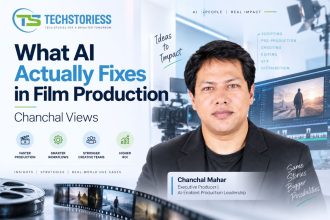
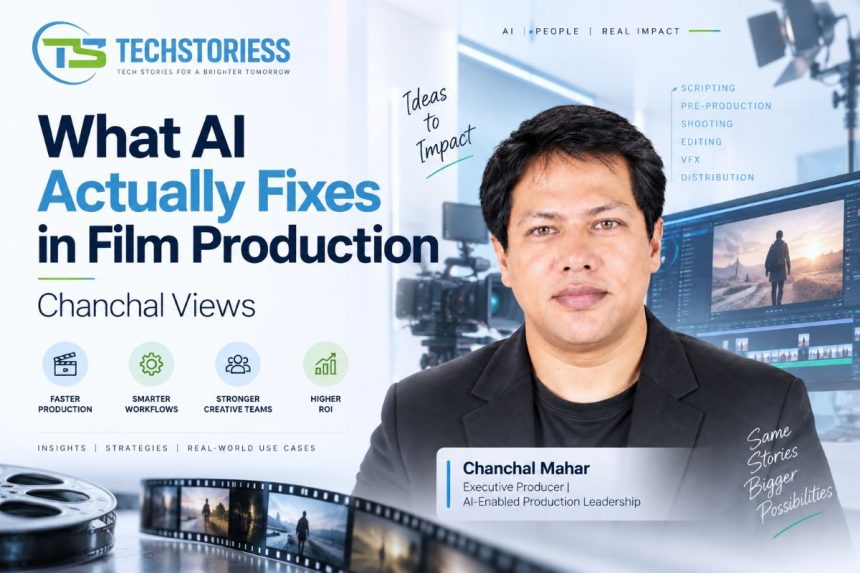
Chanchal Mahar has spent nearly eight years at Pixel Perfect learning to catch that moment before it costs anyone money – which is, in its own quiet way, the real job of an Executive Producer, whatever the title suggests.
Across campaigns for Automotive, FMCG, Fashion, Healthcare and Technology clients – work that has run through the same banner as Coca-Cola – Mahar has built a reputation less on visual flourish than on discipline: aligning creative ambition with what a budget, a schedule, and a crew can actually deliver, and doing it early enough that nobody discovers the gap on set.
His work has collected a Silver and two Bronze awards at AAAI and found its way into Lürzer’s Archive, one of advertising’s more selective international showcases. More recently, he has folded AI into that same discipline – not as spectacle, but as an early-stage tool for visualization and narrative clarity, brought in to sharpen alignment rather than replace judgment. It is a distinction he returns to often, and one that shapes almost everything he says next: constraints, in his account, were never the enemy of good work. They were where it began.
Where do you see Al creating the biggest breakthrough in video creation today?
Honestly, for me, the biggest breakthrough isn’t necessarily in asking Al to generate the final film. Where I’ve actually seen the most immediate difference is much earlier in the gap between a script on paper and the moment a director, a client and an agency team are all picturing the same thing.
That gap used to be filled with reference decks, verbal descriptions, and a lot of “no, not quite like that.” Everyone nods in the meeting, and then you find out three weeks into pre-production that the client imagined something completely different from what the director had in mind. I’ve sat through that conversation more times than I’d like to count.
What’s changed is that we can now put something in front of people fast a mood, a look, a rough sense of a scene – before a single rupee has gone into production. It’s not polished, and it’s not necessarily the final visual, but it gives everyone something concrete to react to instead of a paragraph of adjectives.
I wouldn’t call that faster video creation. I’d call it faster alignment. And alignment is usually where productions lose a lot of time and money not necessarily in the shoot itself, but in the back-and-forth before everyone agrees on what they’re actually trying to make.
How do you think the role of an Executive Producer changes when ideas can become visuals almost instantly?
I get pulled into conversations earlier than I used to. That’s the main shift.
Earlier, my job typically started once the creative was more or less locked and the question was, “How do we make this happen?” budgets, schedules, locations, crew. Now I’m often in the room while the idea itself is still being shaped, because we can put a rough visual version of a concept in front of people while it’s still being debated.
That’s useful, but it also adds a new kind of decision I didn’t used to make as much figuring out which parts of an idea should stay as Al visualization for now, which parts need to be shot for real, and where the two might actually work together in the final piece.
That’s not always obvious. I’ve had discussions where a particular AI-generated look gets everyone excited, and then we have to have the harder conversation about whether something similar is actually achievable, or affordable, on a real shoot.
So I wouldn’t say the role has become more strategic in some grand sense. It’s more that the producer now has to have an opinion earlier, with less certainty, and still be right about what it’ll cost to actually make.
Can Al fundamentally change the economics of TVCs and branded films?
I’d be careful with the word “fundamentally.” What I have started noticing is that it changes where the uncertainty sits.
A lot of money in this business goes into decisions made before anyone’s fully sure – a location recce because we need to see it in person to know if it’ll work, a set built a certain way because that’s what the storyboard implied, or changes happening later because the client only really understood the idea once they saw it coming together.
Some of that uncertainty can now be reduced earlier and more cheaply, before those commitments are made.
That’s genuinely useful from a production standpoint. But I wouldn’t tell a client this makes production cheap. It doesn’t remove the cost of a real shoot day, a real crew, real locations or post-production. What it can do is help us spend that money with more confidence – fewer surprises on set and fewer “this isn’t what we discussed” moments later.
From my experience managing budgets, some of the more expensive problems have come from decisions being locked in too early, before everyone had a clear enough picture of what was being agreed to. That’s the piece I think this genuinely helps with.
How could Al help brands move from one expensive hero film to many platform-specific stories without diluting the brand?
Working across automotive, FMCG, fashion, healthcare and technology, the one thing that’s stayed consistent is that a six-second Instagram cut and a ninety-second hero film are not the same problem. They need different pacing, different opening seconds, and sometimes an entirely different way into the same idea.
Historically, a lot of brands have approached this by re-editing the hero film into shorter versions and adapting it for different platforms. Sometimes that works well, but sometimes you can feel that the original idea wasn’t really designed for the way people consume content on that platform.
Where AI could genuinely help is in generating more starting points different framings of the same core idea, adapted for how people actually watch on each platform without needing a full production for every single one.
The part I’d push back on is the assumption that this automatically protects the brand. It doesn’t. If anything, it makes brand discipline more important, not less, because it becomes very easy to produce a lot of content that technically fits the brief but doesn’t feel like it belongs to the same brand.
You still need someone holding the line on tone, visual language, and what the brand would and wouldn’t say. That’s not something the tools decide for you.
What will separate emotionally compelling brand films from technically impressive but emotionally empty Al content?
I think we’re close to a point where “this looks incredible” stops being enough on its own. Audiences get used to visual quality fast. What doesn’t get old is being made to feel something specific.
I’ve seen work that wasn’t visually extravagant connect far more strongly than something technically impressive, simply because there was something recognisable and human at the centre of it.
That understanding doesn’t come from just generating a good-looking image or video. It comes from noticing how people actually behave, what they leave unsaid, what moves them and what simply looks nice in a frame without really meaning much.
What I’d say to creative leaders right now and this is genuinely how I’ve approached it myself is to actually use these tools hands-on rather than forming opinions about them second hand. I’ve found things Al is surprisingly good at and things it’s not close to ready for, and I’ve learned that difference by actually spending time using these tools in my own creative and production workflow.
The bigger risk I’d flag is using AI because it’s the current thing to be seen using, rather than because it’s solving an actual problem on that particular project. In my experience, that’s usually visible in the final work it looks like it was made to prove a capability rather than to say something.
The tool isn’t the differentiator. Having something worth saying still is.
Closing thoughts
What stays with you here isn’t a bold claim about AI transforming advertising – it’s how carefully Mahar avoids overstating it. AI doesn’t make production cheaper, he insists, just less uncertain, earlier. It doesn’t protect a brand automatically – if anything, it demands more discipline, not less.
Nearly eight years in, Mahar has learned that the expensive mistakes rarely happen on set. They happen earlier, in the gap between what a client imagined and what a director built – a gap AI can shrink, but never fully close.
For anyone navigating AI’s entry into advertising and production, the real takeaway isn’t whether the technology is good or bad. It’s Mahar’s sharper question: what should still require a human in the room.