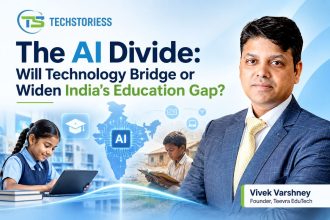



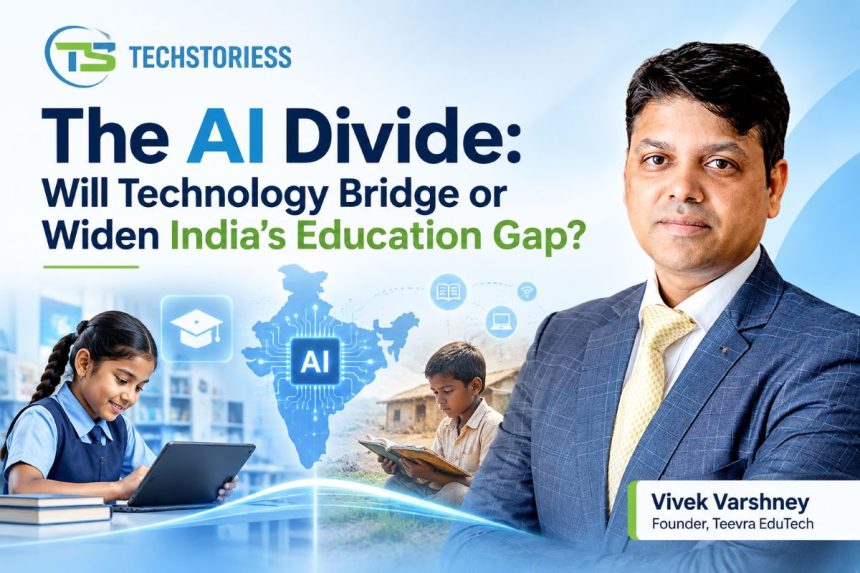
For decades India’s education gap has been talked about in terms of access. A student in a city often had better schools, qualified teachers and coaching classes nearby. However a student in a smaller town or village had to travel far or even move to get the same chances. Technology was seen as a way to fix this. In many ways it has helped.
The first big wave came in education where video lectures, practice questions and study materials became available to anyone who had access to technology. According to the ASER 2024 report, which surveyed households across India, 82.2% of children between the age of 14 and 16 know how to use a smartphone. 90% of them have one at home. The gap in devices is closing faster than many people thought it would.
AI: Opportunity and the Risk of a Wider Divide
Now artificial intelligence is stepping in. AI tools can track where a student is struggling. They can suggest the question to solve and they can show teachers what concepts a whole class finds difficult to solve. For a student in a Tier II or Tier III town without access to coaching, AI could offer personal guidance. That kind of support used to be reserved for a few before.
The same technology could make the gap even wider.
AI works best for students who already have a base in subjects like math and language. They can use an AI tutor to go. A student who is struggling to understand might just copy answers and they might not notice when the answer is wrong. So the divide today is less about having a phone or internet and it is more about what a student knows and how capable they are.
Making AI Accessible Through Schools
Infrastructure is still a problem. According to the UDISE+ 2025–26 report India has 14.67 lakh schools. Only 69.9% have computers and 67.4% have the internet. These numbers show progress and also show that many schools still don’t have the basic tools needed to use digital learning well. AI tools built for classrooms with internet and one device per student may miss the students who need help the most.
Language is another challenge. Most of the AI tools work best in English. A large number of students learn in their local, native languages so if explanations, practice questions and tests are in English, students already knowing English may learn faster. It means AI could end up favoring those who are already fluent in English.
So the real question is not whether AI should enter classrooms, it is how AI is designed and used. Closing the gap means building systems for learning, not just adding tools.
Teachers and Policy: Driving AI Adoption
Schools are the place to start. They reach out to learners in every corner of the country. In addition, they provide something which self-learning may lack. As for when AI becomes a part of classroom practices, such as lesson preparation, classroom activities, assessments and early interventions for underachieving children, then this helps all the kids in the class and not just those with a phone at home. Book-based models that link printed material to practice and data could help schools with limited devices. Students can learn without waiting for everyone to have a device.
Teachers are key to this. A CENTA survey of over 5,000 teachers showed that more than 70% already use AI tools. Only 57% could identify a basic mistake in how AI works and there is a discrepancy between the use of AI and its comprehension. Teacher training for teacher training programs and classroom-ready materials would help teachers direct their pupils on when to rely on AI and when to doubt it.
Policy is starting to take steps. The Central Board of Secondary Education(CBSE) in partnership with NCERT is introducing a curriculum on computational thinking and artificial intelligence. It will be taught in Classes III to VIII starting from 2026–27. The implementation of this program will be different from state to state and board to board. It will depend on the success of reaching schools beyond urban areas with trained teachers and age-appropriate materials and tests.
Building an Inclusive AI-Powered Education System
Responsible use is important. AI systems collect learning data from millions of students. Schools and tech companies need rules for privacy and transparency in how recommendations are made with checks for bias in content and tests.
For a country with one of the most school-going populations, closing the AI gap is not just an education issue, it is a responsibility that will take schools, teachers, policymakers and tech companies to work together. They must focus on what students learn, not just how many tools are used.
Technology alone cannot bridge nor widen India’s education gap. The outcome will depend on the choices we make today. On making sure that a student’s chance to benefit from AI is based on their potential, not their location.
Article Contributed By Vivek Varshney, Founder of Teevra EduTech