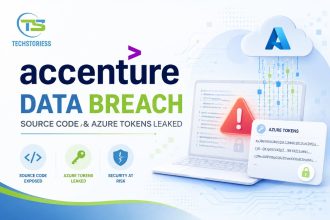



Anthropic’s Claude Fable 5 and its more powerful, access-restricted sibling Claude Mythos 5 had a rough first three weeks. Launched June 9, 2026, as the first Mythos-class models available beyond a small research circle, both were pulled offline globally just three days later on orders from the U.S. Department of Commerce. Access wasn’t fully restored until July 1. The saga says less about Anthropic’s engineering than about who actually gets to decide when frontier AI is safe to use.
From Research Preview to Public Release — and Back
Fable 5 launched as Anthropic’s most capable public model, with safety classifiers that route sensitive cybersecurity, biology, and chemistry queries to the older Claude Opus 4.8 instead. Mythos 5 runs on the same underlying model but with those specific safeguards lifted, distributed only through Project Glasswing, Anthropic’s vetted-partner cybersecurity program.
Early enterprise feedback was strong: Stripe reportedly compressed a large Ruby codebase migration into a single day, and third-party evaluators at Hex and Base44 praised the model’s coding and analytical chops.
Then, on June 12, Commerce issued an export-control directive barring any foreign national — including Anthropic’s own non-U.S. employees — from using either model. The trigger was a jailbreak that Amazon’s security team had flagged directly to the White House. Unable to verify user nationality in real time, Anthropic pulled both models worldwide.
Restoration came in stages:
- June 26 — partial reopening for trusted Mythos users
- June 30 — Commerce fully withdrew the export-control requirement
- July 1–2 — Fable 5 returned globally
What Analysts Actually Disagree About
Everyone agrees on the timeline. Nobody agrees on what it means.
Sanchit Vir Gogia of Greyhound Research argues Washington effectively stretched the decades-old “deemed export” doctrine — previously used to keep foreign nationals away from controlled technical knowledge — onto a frontier AI model for the first time, turning capability access into what he calls conditional infrastructure.
The Council on Foreign Relations called the order a functional blanket ban regardless of its narrower legal wording, since Anthropic had no technical way to tell U.S. from non-U.S. users at the API layer. The Peterson Institute for International Economics went further, warning that briefly cutting off global access to a leading American model handed Chinese open-weight developers a real opening — the first time public frontier AI capability actually moved backward.
On Capitol Hill, the reaction split predictably: Senator Josh Hawley criticized what he sees as Washington’s overly hands-off posture on AI oversight, while a bipartisan House discussion draft — the Great American AI Act — signaled appetite for a more formalized review process than the ad hoc directive Commerce actually used.
The Story Everyone Missed: Data Retention
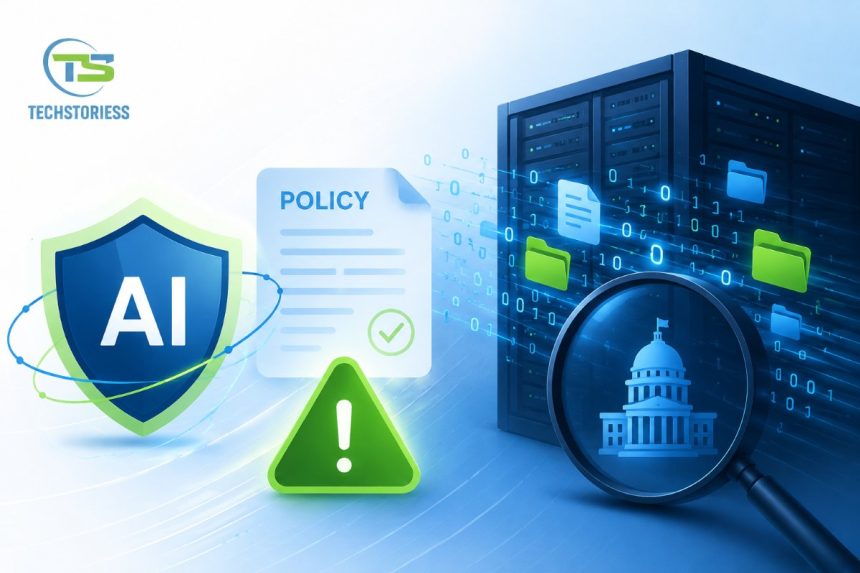
Buried under the export-control drama is a data-retention condition attached to both models. Fable 5 and Mythos 5 are designated “Covered Models,” which carries a mandatory 30-day retention window with no zero-data-retention (ZDR) option — reversing terms that enterprise customers had already negotiated on earlier Claude models.
Anthropic says this is necessary for its safety classifiers, which need visibility across requests to catch coordinated jailbreak attempts rather than isolated queries. AI-focused attorney Jessica Eaves Mathews notes the change overrides prior enterprise agreements outright, applying even to organizations that had already set up zero-retention workspaces.
The practical fallout was immediate: Microsoft pulled Fable 5 from its internal Copilot model picker because the retention terms conflicted with its own zero-retention standard — even as it left the model available to its own customers.
For enterprise buyers, this matters more than the export-control headlines. It sets a template: access to a frontier model’s top tier may now come bundled with data-handling terms a company’s existing compliance posture simply can’t accommodate — independent of whatever any government does next. Procurement teams should weigh retention terms as heavily as price and benchmarks, not bury them in a data-processing addendum.
Where the Experts Split: Intent and Remedy
Anthropic, joined by an open letter from over 100 cybersecurity and policy specialists, argued that Fable’s defensive value to security teams outweighed the marginal risk from a jailbreak that exposed only narrow, previously known weaknesses — an “incremental risk” framing.
TechPolicy.press pushed further, naming the real unresolved question: is the government regulating genuinely new capability (where incremental-risk arguments hold up), or regulating capability as such (where they don’t)? Commerce never said which theory it was operating under — an ambiguity that continues to worry both CFR and Chatham House. The latter warned bluntly that the administration’s flip-flopping “undercuts global safety and governance at a pivotal time.”
There’s also an unresolved tension involving Amazon, which both flagged the jailbreak that triggered the shutdown and holds a roughly $13 billion stake in Anthropic, with billions more committed. Fortune reports AWS chief Andy Jassy personally raised the issue with the White House — but how Amazon balanced its investor interest against its stated security concern remains unclear, and no outlet has resolved it.
The Takeaway for Enterprise AI Strategy
Frontier-tier model access is starting to look less like a software release and more like export-controlled semiconductor equipment — a policy-mediated resource, not just an engineering milestone.
For enterprises adopting Mythos-class or successor models, three things follow:
- Expect further government intervention cycles, and build vendor-agnostic fallback paths before the next suspension, not after.
- Scrutinize data-retention terms with the same rigor applied to pricing — that condition wasn’t reversed with the export order and shows no sign of becoming negotiable.
- Recognize the real lesson isn’t that a more powerful model shipped. It’s that owning the most capable AI in the world no longer guarantees the right to unilaterally control who gets to use it.