


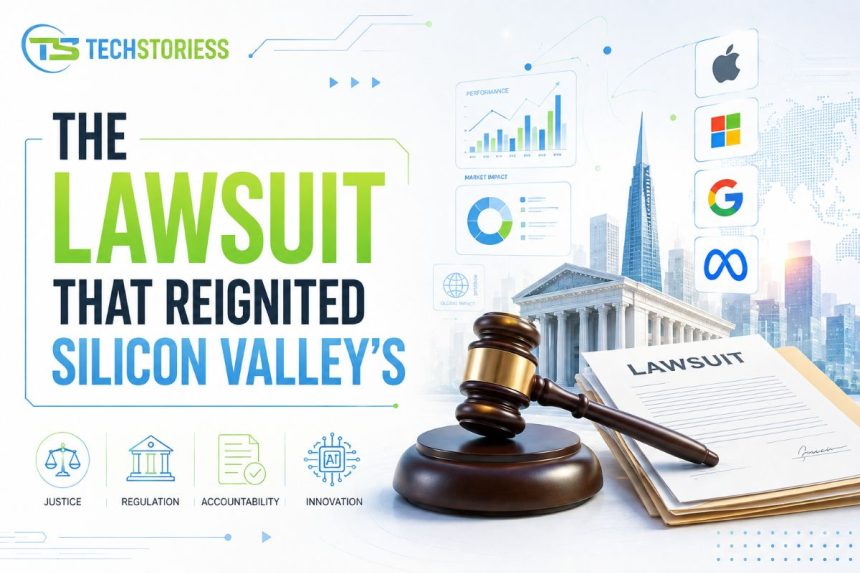
For three weeks this spring, a federal courtroom in Oakland became the unlikely stage for the most public airing of Silicon Valley grievances in years. On one side sat Elon Musk, the world’s richest man. On the other, Sam Altman, the face of the generative AI boom he helped set off. Once co-founders united by a shared mission, they spent April and May 2026 as courtroom adversaries, and the trial exposed just how personal – and how expensive – a decade-old founder’s dispute can become.
How a Handshake Became a Lawsuit
Musk and Altman founded OpenAI together in 2015 as a nonprofit research lab, built on the explicit premise that advanced AI should be developed for the benefit of humanity rather than any single company’s profit. Musk was an early financial backer, eventually contributing roughly $38 million in the organization’s formative years.
The partnership fractured in 2018. Musk pushed to take direct control of OpenAI – either by acquiring majority ownership of a proposed for-profit subsidiary or by folding the lab into Tesla outright. Altman, Greg Brockman, and co-founder Ilya Sutskever rejected the plan. Musk resigned from the board that same year. Five years later, in 2023, he launched a direct competitor, xAI, which now operates as part of SpaceX.
The falling-out might have stayed a private grudge if OpenAI hadn’t spent the following years transforming into one of the most valuable private companies on the planet, largely on the back of a deepening alliance with Microsoft. Musk filed his first lawsuit against OpenAI and Altman in March 2024, accusing them of abandoning the nonprofit’s founding charter in favor of what his complaint called a “closed-source de facto subsidiary” of Microsoft. He withdrew that filing weeks later without explanation, then refiled a more detailed version in federal court, setting up the case that would eventually reach a jury.
Inside the Trial
U.S. District Judge Yvonne Gonzalez Rogers agreed to fast-track the case, and testimony began in late April 2026. Microsoft was named as a co-defendant, with Musk’s team arguing the software giant had knowingly enabled a breach of charitable trust through its investments in OpenAI’s for-profit arm – including a reported $10 billion commitment that came with intellectual property rights and a share of future profits.
The courtroom dynamic became a story in itself. Musk repeatedly clashed with OpenAI’s attorney, William Savitt, at one point accusing him of asking deliberately misleading questions. Altman’s turn on the stand looked markedly different – his cross-examination was tense but far less combative, with Musk’s lawyer, Steven Molo, pressing him on a February 2023 text message in which Altman had told Musk he was “tremendously thankful” for his help and that OpenAI wouldn’t have happened without him. Altman testified that his view of Musk had changed considerably since then.
Perhaps the most memorable exchange came when Musk was asked why he waited so long to sue if he genuinely believed OpenAI had betrayed its mission years earlier. His answer: suspecting someone might steal your car isn’t the same as someone actually stealing it. That distinction – between suspicion and certainty – would end up deciding the entire case, though not in the way Musk intended.
Jurors also heard testimony from Brockman and, notably, Microsoft CEO Satya Nadella, underscoring how deeply intertwined OpenAI’s corporate structure had become with its biggest backer by the time the dispute reached trial.
A Verdict That Never Touched the Merits
On May 18, 2026, after less than two hours of deliberation, the nine-person advisory jury reached a unanimous conclusion – but not on the question everyone had been watching for. The jury never ruled on whether Altman, Brockman, and OpenAI actually breached a charitable trust. Instead, it found that Musk had waited too long to file his claims, placing them outside the applicable three-year statute of limitations. Judge Gonzalez Rogers adopted the jury’s finding as her own ruling and dismissed the case.
Central to that finding was timing: jurors determined Musk knew, or reasonably should have known, about OpenAI’s shift toward a for-profit structure years before he ultimately filed suit in 2024. OpenAI’s legal team had specifically pointed to a September 2020 post Musk made on X describing OpenAI as effectively “captured by Microsoft” – evidence, they argued, that he understood the arrangement well before deciding to sue.
The practical effect was sweeping. The verdict shut down Musk’s bid to force structural changes at OpenAI, including removing Altman and Brockman from leadership or unwinding the company’s for-profit arm entirely. Musk had sought damages directed toward OpenAI’s original charitable mission rather than to himself personally – a framing his legal team used throughout to position the suit as principle-driven rather than personal. OpenAI’s side told a different story in court, portraying the lawsuit as Musk’s attempt to hobble a rival after failing to seize control of the company himself, noting he’d once pushed to fold OpenAI into Tesla outright.
“A Calendar Technicality” – And What Comes Next
Musk didn’t take the loss quietly. He posted on X that the decision was a “calendar technicality” and confirmed his intention to appeal, and his attorney, Marc Toberoff, offered reporters a one-word summary on his way out of the courthouse: “Appeal.” Co-counsel Steven Molo told reporters he read the verdict as resting narrowly on technical statute-of-limitations issues, and said he believed Musk’s side had substantively proven its underlying claims about the founders’ breach of duty – a case he hopes an appellate court will revisit.
OpenAI’s camp, unsurprisingly, read the outcome very differently. Savitt told reporters outside the courthouse that the jury’s evidence assessment tilted conclusively in one direction – theirs.
Why This Matters Beyond Silicon Valley Gossip
For enterprise technology leaders, the Musk-Altman trial was never really about celebrity theater, even though it often played out like it. The underlying legal question – whether a company can legitimately convert from nonprofit-controlled AI research lab to a for-profit entity valued in the hundreds of billions, while retaining public trust and government goodwill – remains fundamentally unresolved. The jury sidestepped it entirely.
That matters for CIOs and CISOs evaluating long-term vendor relationships with OpenAI, and for the broader AI governance conversation. OpenAI’s restructuring proceeded in parallel with the litigation, including a reported $500 billion valuation and a 27% ownership stake granted to Microsoft, all while the company maintained that nonprofit oversight still governs its for-profit operations. Whether that governance structure holds up to future scrutiny – from regulators, from competitors, or from another lawsuit – is a question this trial raised but didn’t answer.
An appeal, if it proceeds, could reopen exactly the substantive questions this jury never reached: what OpenAI’s founders actually promised early donors and each other, and whether the company’s meteoric commercial rise came at the cost of that original charter. Until then, the feud that helped define a decade of AI development remains unresolved – just quieter, for now, than it was in that Oakland courtroom.