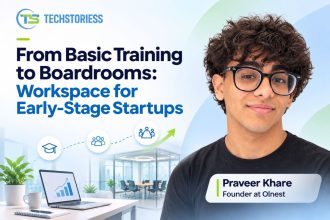



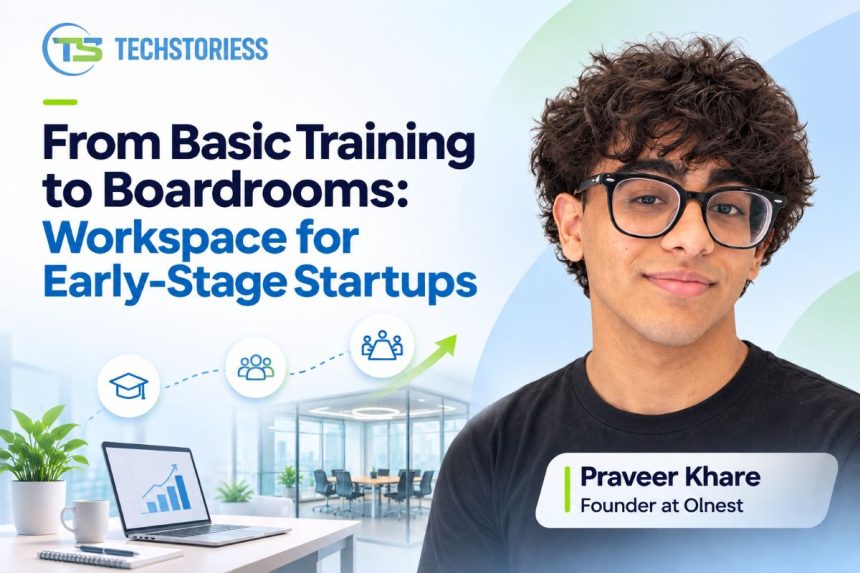
Most early-stage founders don’t fail for lack of ideas. They fail because they have no network, no guidance, and no clear sense of whether they’re ready to raise. Praveer, who has invested his own money since he was 12, started Olnest in April 2026 while in Basic Military Training to close that gap. Olnest is a single workspace where founders run their company, learn from mentors, prepare for fundraising, and meet investors. In this conversation, he explains what “verified” really means, where AI helps and where it doesn’t, and what military discipline taught him about building a company.
You started Olnest in April 2026, while in Basic Military Training. What did you see in the startup and investor world that made you start building now?
I’ve been investing my own money since I was 12, so I initially approached this from the investor side. But as I started building, I became much more interested in what founders had to go through before an investor even saw them.
You can have a strong idea and the ability to build it, but that doesn’t automatically give you a network, experienced guidance, or an understanding of whether you’re ready to raise. You’re expected to figure out the product, customers, operations, and fundraising, often with a very small team.
That’s the gap behind Olnest. We’re building one workspace where early-stage founders can run their company, get mentorship, prepare for fundraising, and connect with investors.
The ambition is simple: a capable founder should have a better starting point than a blank document and a list of people they don’t know.
Your About section says founders and investors waste time on “disconnected tools, information and networks.” What was the moment you felt that problem yourself?
For me, it became clear when building a product didn’t answer the next set of questions. Who should I speak to? What would an investor need to see? Where could I find someone experienced enough to help with the decision in front of me?
The answers were scattered across different communities, documents, and conversations. I was carrying the context between all of them.
That’s a real problem for a small startup. Your tasks tell you what needs doing, your pitch deck tells investors a story, and your mentor hears about the company on a call. But those things should inform each other.
With Olnest, I want the work a founder does every week to help them become better organised and better prepared for the next conversation. They shouldn’t have to rebuild the story of their company every time someone new enters it.
Olnest brings startup workflows, mentors, and investor connections into one platform. If a founder uses only one feature in week one, which should it be?
I’d start with the investor-readiness assessment—even if they aren’t raising immediately.
It gives the founder a starting point: what can you already demonstrate about the business, and where do you still need stronger evidence? The score is useful, but the next decision it helps you make matters much more.
If your customer understanding is weak, that should shape your next week. If your positioning is unclear, that’s a useful conversation to have with a mentor. If you’re preparing to raise, you need to understand the gaps before an investor points them out.
From there, Olnest’s workspace becomes where you organise and follow through on that work.
My ideal outcome for week one is that the founder can say, “I know what matters most, I know what I’m doing next, and I know where to get help.”
You’re building a “verified startup pipeline” for investors. What does verified mean in practice, and who does the verifying?
The key distinction is that a reviewed startup has gone through a human review by the Olnest team before being approved for investor discovery. Simply creating a profile doesn’t make a company approved.
Our founder experience brings together readiness information and supporting evidence, so the conversation can have more substance than a pitch deck alone. Investors can discover approved startups and request introductions, and the founder decides whether to accept.
I also want to be precise about what the word “verified” means. It isn’t a guarantee that a startup will succeed, and it doesn’t replace an investor’s own due diligence.
The value is a more informed starting point. Founders get a clearer route to being considered, and investors get a pipeline that has had an initial human review.
Longer term, I think the most useful startup profile should show how a company is progressing, rather than just how well it presents itself on one particular day.
You said you’re exploring how AI can reduce founders’ admin work. Where does AI sit in Olnest today, and where will it never replace a human?
One concrete use today is AI investor pitch practice. Founders can practise through text or voice and receive feedback before having the real conversation.
That matters because access to useful feedback is uneven. A founder should be able to practise explaining the business, identify weak answers, and improve without needing a warm introduction every time.
The broader direction is to use AI to reduce the work involved in organising information and preparing for decisions. I’m interested in whether it gives a founder time back and helps them act with better context.
Where I draw the line is accountability. AI can help prepare an answer, but the founder owns the claim. It can help someone practise, but it doesn’t replace an experienced mentor’s judgment or an investor’s responsibility to make their own decision.
The relationships still matter. Trust, difficult feedback, and understanding someone’s situation are central to what we’re building.
Which five mentor skills matter most, and why those: go-to-market, B2B sales, tech, operations, fundraising readiness?
Those five matter because they cover the path from having an idea to running a business that customers—and eventually investors—can take seriously.
Go-to-market: Who is the customer, what problem matters enough to pay for, and how do you reach them? Getting this wrong makes everything else harder.
B2B sales: Interest is encouraging, but founders need to learn how buying decisions happen and how to turn conversations into revenue.
Technology: Founders need help deciding what to build, what to leave out, and which technical choices will create problems later.
Operations: As soon as several people are involved, ownership, priorities, and follow-through become essential. The founder can’t carry every detail in their head.
Fundraising readiness: Founders need to understand what they can substantiate, what investors will question, and whether raising is the right next step.
For Olnest, mentorship should lead to something concrete. A clearer customer profile. A better sales process. A product decision. A stronger financial plan.
That’s also why we’re developing university society partnerships to support mentors with research. Experienced guidance becomes much more useful when someone helps turn it into work the founder can actually use.
Where do you want Olnest in three years, and what would success look like?
I want Olnest to become the workspace a founder starts with and continues using as the company grows.
A founder might first come for mentorship or help becoming investor-ready. But the long-term value is in helping them run the business every week. Raising money is a milestone; operating the company continues afterwards.
On the investor side, I want Olnest Venture to help teams discover relevant startups, manage their deal pipeline, and collaborate with better context.
The international opportunity matters to me as well. We’re developing relationships across markets including Singapore, the Philippines, Australia, and Africa. Strong founders exist far beyond the networks that usually receive the most attention.
Success would mean founders consistently using Olnest to make progress, mentors helping them solve meaningful problems, and investors finding companies they want to spend time understanding.
I want to build something founders would miss if it disappeared from their working week. That’s a much higher bar than getting someone to sign up.
What did military discipline teach you that a founder can actually use?
Accountability is probably the biggest lesson. If you own something, people need to be able to rely on you to follow through.
That applies directly to building a startup. You can have a very ambitious vision, but your team, customers, and partners experience the company through the commitments you keep.
Another lesson is that standards matter most when you’re tired or under pressure. Clear procedures and communication help people execute when motivation alone isn’t enough.
It has also shaped how I think about leadership. People need to understand the objective, their responsibility, and when to raise a problem. If every decision has to come back to the founder, the company eventually moves at the speed of one person.
For me, discipline means making progress repeatable. You shouldn’t need a perfect day to do useful work.
What one piece of advice would you give a student who wants to start a company before graduating?
Speak to the people who have the problem before you spend months building the solution.
It sounds obvious, but building can feel much more comfortable than asking someone whether they actually need what you’re making. You can keep adding features and feel productive without learning whether there’s a business underneath them.
Ask people what they do today, where they get stuck, what they’ve already tried, and what the problem costs them. Then build the smallest useful thing that lets you test your understanding.
You don’t need to wait until graduation to begin learning those things. You also don’t need to pretend you have every answer.
That’s part of why I’m building Olnest. Starting a company already asks a lot of someone. Finding guidance, organising the work, and preparing for the next stage should be easier.
Start with a real problem. Stay close to the people experiencing it. Give yourself permission to change your approach when the evidence changes.
Conclusion
Olnest’s ambition is to be a tool founders would miss if it disappeared from their working week, which is a higher bar than getting sign-ups. Its approach rests on a few principles: human review before investor discovery, AI that prepares founders but never replaces accountability, and mentorship that ends in concrete work. With relationships developing across Singapore, the Philippines, Australia, and Africa, Olnest is betting that strong founders exist well beyond the networks that usually get the attention.