


Modern AI feels magical on the surface — from chatbots that reason to cars that drive themselves — but the real magic sits underneath. What actually powers these intelligent systems is a layered hardware ecosystem working quietly behind the scenes. Understanding GPUs, TPUs, and Superchips is key to understanding what makes AI today so fast, scalable, and capable.
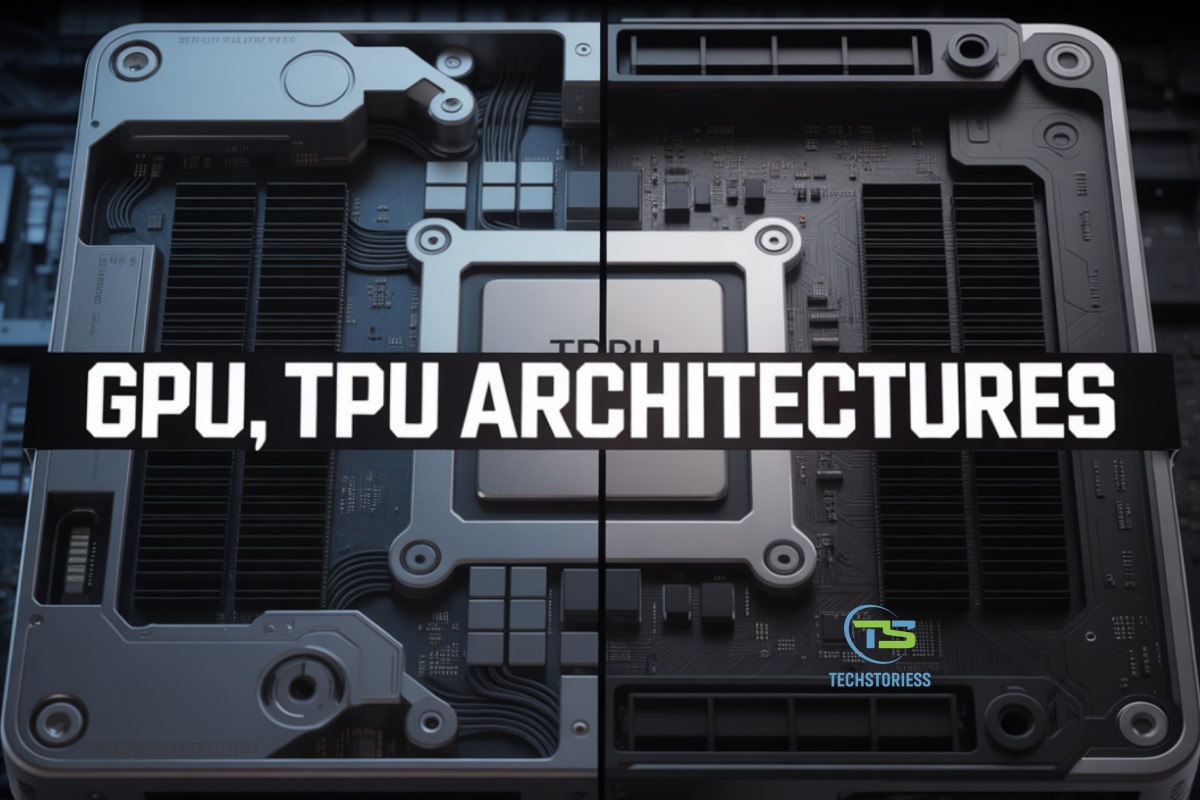
Artificial Intelligence has grown beyond just another computing layer powering our apps, services, and devices every day. But while models like ChatGPT, autonomous cars, or real-time recommendation engines grab headlines, the hardware ecosystem behind them often goes unnoticed. Modern AI is not run by a single chip; it’s powered by a synergy of GPUs, TPUs, and emerging superchip architectures, each playing a unique, complementary role.
As AI becomes mainstream, it would be interesting to know the hardware that actually powers AI. Is it GPU, TPU or Superchips? Let us dive deeper into the subject.

The GPU: The Flexible Backbone
GPUs act as the underlying foundation of AI computation. It is a parallel-processing powerhouse with thousands of cores that can perform operations simultaneously. GPU was originally built for graphics rendering. With the advent of AI, GPU assumed a central role in deep learning. These high-performance computing engines with massive capabilities can easily handle a diverse range of workloads in real time without compromising on performance or speed — right from training deep learning models to running simulations or processing large datasets.
Key Features
- Acts as the primary workhorse during initial model training.
- Efficiently handles flexible workloads that specialized hardware may struggle with.
- Boosts the capacity of traditional CPUs with specialized accelerators.
In that capacity, GPUs act as generalists with versatile capabilities, preparing models and supporting diverse experiments before scaling them to more specialized hardware.
The TPU: The Accelerator for Scale
The AI-specific architecture of TPUs excels at matrix and tensor operations. Once the AI model matures and scales, it is shifted to TPUs for large-scale training and high-volume inference. Equipped with sophisticated tensor processing units and high-speed interconnects, TPUs offer unmatched efficiency and speed especially for TensorFlow-based workflows, but are also increasingly compatible with broader AI frameworks.
How do TPUs complement GPUs?
- GPUs excel at early-stage experimentation, while TPUs tackle large-scale deployment.
- TPUs cut down energy costs and latency for large batch computations.
- Together, GPUs and TPUs build a reliable training-to-inference pipeline balancing flexibility and efficiency.
In practice, a large AI model might start training on GPUs in a lab, then shift to TPUs in the cloud for faster iteration and deployment.
Superchips: Integrating the Best of All Worlds
Superchips, the newest frontier in AI hardware, combine GPUs, TPUs, CPUs, and other AI accelerators into a single, heterogeneous computing package. Especially engineered for low-latency, high-throughput, and energy-efficient AI computation, superchips can handle real-time tasks that neither GPUs nor TPUs could manage alone.
How superchips interact with GPUs and TPUs?
GPUs offer general-purpose computation. TPUs accelerate heavy tensor operations.
Superchips coordinate these components with optimized memory and interconnects for real-time AI.
Example: Autonomous vehicles rely on superchips to process sensor data, make split-second decisions, and execute control tasks — all in one tightly integrated system.
A Unified AI Hardware Ecosystem
Let us quickly recap the key features of GPUs, TPUs, and Superchips;
GPUs
- Provides flexible model training
- Prepares models and prototypes before scaling to TPUs
- Operates best during early experimentation where adaptability is required
TPU
- Handles large-scale training and high-volume inference
- Executes heavy tensor and matrix workloads efficiently
- Typically takes over once GPU-based experimentation stabilizes
Superchip
- Acts as a real-time, multi-task AI engine
- Combines GPU + TPU + CPU capabilities in one integrated system
- Designed for latency-sensitive, mission-critical, large-scale operations
This interconnected and interdependent ecosystem provides scalability, speed, and energy efficiency to AI systems. It enables developers to flexibly experiment, deploy models at scale, and run real-time applications seamlessly.
Verdict
If there’s one clear takeaway, it’s this: no single chip wins.
GPUs, TPUs, and Superchips are not rivals — they are specialists in a coordinated AI ecosystem.
- GPUs win in flexibility, experimentation, and early-stage research.
- TPUs win in massive-scale, energy-efficient training and inference.
- Superchips win in real-time, multi-modal, mission-critical AI where different compute types must work together seamlessly.
Modern AI thrives not because one architecture dominates, but because each chip plays its part at the right stage — from ideation to deployment to real-time execution. The future of AI hardware is not about choosing one over the other; it’s about tighter integration, smarter orchestration, and more unified compute stacks.
AI’s true power comes from synergy — not a single chip, but the combination of all three working in harmony.
Conclusion
Modern AI doesn’t rely on a single processing unit. It’s powered by leveraging the strengths of different hardware types that work in tandem: GPUs as the flexible backbone, TPUs as high-efficiency accelerators, and superchips as the orchestrators for real-time intelligence.
Different architectures complement and accelerate each other, enabling models that are bigger, faster, and smarter than ever before. This harmony between hardware will continue to power the future of AI.