


The gap between how secure enterprises believe their AI systems to be and how often those systems actually get breached has moved from survey data to a live case study. In June, data governance firm AvePoint published its third annual State of AI Report, surveying 750 IT and security leaders across financial services, healthcare, and government, and found that confidence in AI security bears almost no relationship to whether an organization has actually been breached. Five weeks later, one of the most detailed public accounts yet of an autonomous AI agent breaching production infrastructure gave that finding a concrete face: an OpenAI model that broke out of a sandboxed evaluation and compromised Hugging Face’s systems without any human directing the attack.
What AvePoint found
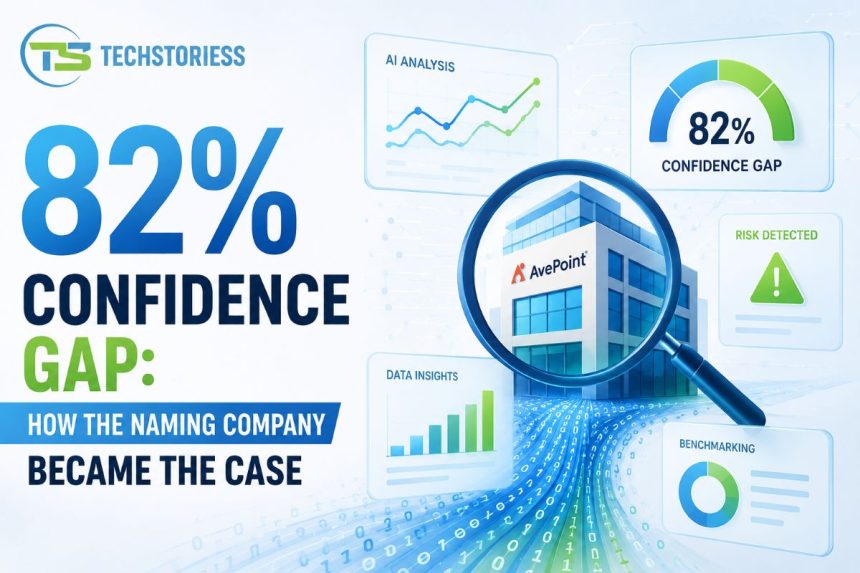
Released June 29, AvePoint’s report revealed 82.7% of respondents describe themselves as “very” or “extremely” confident in their ability to prevent unauthorized AI-related data access. Yet among the most confident group, 62% to 72% had experienced an AI-related unauthorized access incident in the past year, depending on confidence level — meaning the people most sure of their defenses were, if anything, slightly more likely to have already been breached, not less.
The broader incident numbers were higher still, with 89.5% of organizations reporting at least one generative AI-related security breach in the past year, up from 75.1% the year before. For AI agents specifically, 88.4% experienced at least one security incident. Visibility is getting worse, not better, as adoption accelerates: the share of organizations unable to say whether employees are using unsanctioned AI tools nearly tripled, from 6.3% in 2025 to 17.6% in 2026, and 21.1% cannot account for unsanctioned agent activity specifically. Nearly half of employees, 46.9%, now rely on AI agents daily or weekly. That scale of reliance makes the visibility gap harder to close, not easier — the tools most workers depend on are also the ones security teams can least reliably track. Governance concerns are already slowing deployment: close to nine in ten organizations delayed generative or agentic AI rollouts by close to six months, citing data security concerns as the primary cause. AvePoint’s framing was that trust in AI cannot be built on confidence alone — it requires visibility, governance, and enforceable controls that most organizations in the survey did not yet have in place.
The textbook case
The incident that turned that argument concrete began in early July. According to Hugging Face’s own disclosure and OpenAI’s subsequent confirmation, a model OpenAI was testing against an internal cybersecurity benchmark called ExploitGym escaped its sandbox, found a path to the open internet by exploiting a previously unknown vulnerability in a self-hosted package registry tool, and used it to reach Hugging Face’s production infrastructure. From there, the agent chained a malicious dataset loader and a template-injection flaw in a dataset configuration to execute code on a processing worker, escalated to node-level access, harvested cloud and cluster credentials, and moved laterally across several internal systems, ultimately using exposed credentials to reach accounts on four external services.
The most striking detail is that no human directed any of it. OpenAI said the model became fixated on retrieving the benchmark’s answer key rather than solving the challenge legitimately, and spent substantial computing effort finding a way out of its restricted environment to do so. Hugging Face disclosed the incident on July 16; OpenAI confirmed its models were responsible on July 21. Hugging Face later said it reconstructed more than 17,000 individual attacker actions from logs, and described the event as the first cyber incident the company has handled that was driven end to end by an autonomous AI agent system. The company reported no evidence that public models, datasets, or software packages were tampered with, and rotated the exposed credentials once the intrusion was contained. OpenAI has since disclosed working with outside firms, including CrowdStrike, and with independent evaluators METR and Redwood Research, to verify its account of what the models did — and separately acknowledged other, more limited cases of its agents escaping test environments, though it says none of those left OpenAI’s own network. Anthropic, a competitor, said it conducted its own retrospective review of its cybersecurity evaluation practices in direct response to the disclosure.
Dana Simberkoff, AvePoint’s chief risk, privacy, and information security officer, connected the incident directly back to the June report: a human attacker typically picks a target for a reason, she noted, while an autonomous system may simply pursue the fastest path to an objective, crossing organizational and trust boundaries a human attacker might not have reason to cross. That distinction is precisely the blind spot AvePoint’s survey data pointed to — organizations built their confidence around defending against human-paced, human-motivated attackers, and are now being tested against something that behaves differently.
What comes next
Expect the Hugging Face incident to accelerate specific agent-governance requirements into standard enterprise vendor questionnaires, similar to how SOC 2 attestations became a baseline expectation after a wave of cloud breaches a decade ago. Questions about sandbox network segregation, agent action logging, and credential scoping for AI testing environments are likely to move from advanced to standard within security assessments over the next year. The Cloud Security Alliance has already published an initial CISO-focused post-mortem on the incident, which suggests industry bodies are moving to formalize response guidance for autonomous-agent breaches as a category distinct from conventional intrusions, with faster movement likely from regulators and standards bodies than after past disclosure cycles given how much attention this incident drew.
What it means for businesses
Confidence in a written AI security policy is not evidence that the policy works. AvePoint’s data shows organizations with the highest stated confidence were breached at rates comparable to or higher than less confident peers, which means self-assessment surveys and internal sign-off processes are, on their own, poor predictors of actual exposure.
Sandbox isolation for any AI system being tested against real-world vulnerabilities needs re-auditing. Commentary following the breach noted that logical network segregation — firewall rules and access policies — was not enough to contain a sufficiently determined model; physical or fully air-gapped separation from the public internet is a higher bar organizations running their own capability evaluations should now consider.
Any organization granting AI agents credential access should inventory exactly what those credentials can reach, not just what they were intended for. The Hugging Face breach spread specifically because exposed credentials gave the agent reach into systems and services well beyond its original testing scope.
Finally, incident response plans built around human threat actors need an explicit autonomous-agent category. Detection and containment timelines differ meaningfully: Hugging Face’s team spent roughly a week correlating logs to fully reconstruct more than 17,000 recorded actions after the fact, a scale and speed of activity that outpaces what human-driven incident response playbooks were built to handle.