


For years, digital advertising has leveraged automated technology designed to enhance efficiency. Automated bidding, algorithmic targeting, and predictive analytics have all offered “smarter” campaigns to marketers, and yet the majority of these types of technologies operate within a human-defined framework. For instance, marketers provide the campaign structure, the machine optimizes based on those constraints, and when an intervention is required, the performance team will step in.
In contrast, Agentic AI represents a more profound transformation.
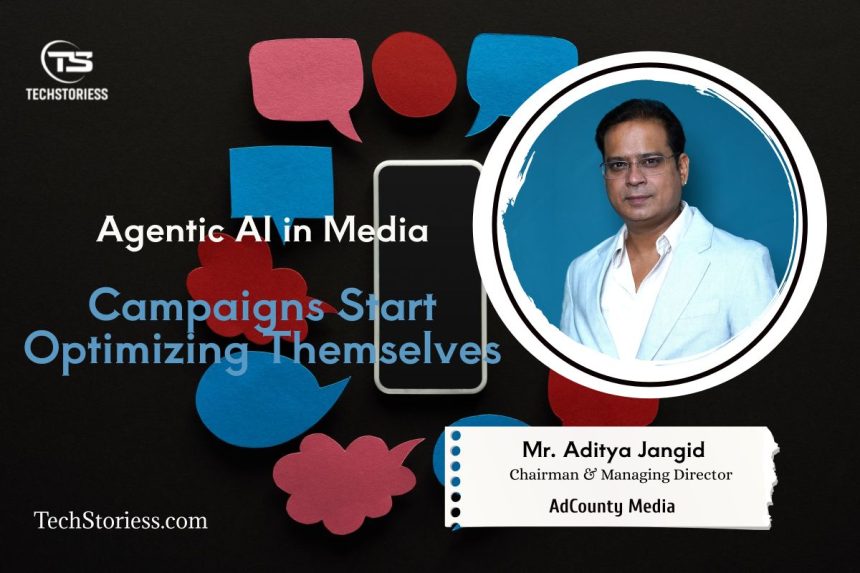
Agentic AI is not simply an execution system, but rather an autonomous decision-making agent operating in the digital media ecosystem. The systems observe performance indicators, identify patterns, and take automatically determined actions, such as re-allocating funds, updating targeting parameters, changing pacing, and modifying the structure of the campaign in real-time; thus, the campaign no longer exists as a static configuration, rather, it begins to perform as a self-regulating entity.
This technology change is much deeper than an additional layer of automation; it is redefining digital advertising, from the inside out.
How Campaigns Are Learning to Evolve in Real Time
According to conventional media buying practices, everything goes through a methodical and straightforward operation: plan, launch, optimize, and repeat! This is true even for the most complex advertising campaigns that are continually measured by means of recurring evaluations undertaken by teams that examine dashboards for patterns and trends to make necessary modifications.
In contrast to traditional media buying systems, agent-based systems characterize campaigns as ongoing, dynamic entities with continuously changing signal sets (i.e., the impressions, clicks, session depth, etc.) that provide continuous feedback. Signals from multiple channels and forms of data are processed by the system and used to make real-time adjustments based upon accepted criteria. Once the system is analyzing behavior in real-time, the parameters of the audience definition, creative rotation, and bidding strategy will change according to how often the audience is exhibiting new behaviors.
The end result is that the campaign “adjusts” while it is still functioning rather than “adjusting” after it has completed its run.
Moving Beyond Channel Thinking
Agentic AI is reshaping our understanding of performance, and one way it does this is by altering the way we think about optimization over the years. In the past, optimization occurred through channels. That is, a platform’s performance was evaluated through comparing costs and metric data from different placements and channels; however, today’s consumer journey typically does not have discrete channels. For example, a consumer may discover a product through short-form video, validate it on a social media platform, and ultimately purchase it through a mobile app.
Agentic AI systems evaluate campaigns using an analysis of the series of behaviours (literally ‘a timeline of consumer interaction’) rather than just evaluating how each channel performed individually.
When evaluating channel performance, instead of identifying which channel has been the personal best performer, the Agentic AI system identifies the combination of impressions and interactions that create the greatest level of success. When certain paths show a greater level of engagement or interaction with a product, the Agentic AI will automatically continue to develop those patterns to create new opportunities for marketers to connect with and engage with consumers.
What is created is therefore a form of optimization based on a large number of pattern recognitions.
Budget Becomes a Fluid Variable
Historically, media plans have mainly been based on a set amount of budgeted money being allocated over multiple channels based upon historical trends, forecasting and/or any negotiated (i.e. agreed upon) commitments.
With the emergence of Agentic Artificial Intelligence (AI), this model is fundamentally changing.
With these new systems operating to constantly assess and evaluate media KPIs and performance signals in real-time, budgets will start to flow to where they are getting higher momentum from environments, audiences and creative formats – and away from environments, audiences and creative formats that are showing decreasing returns.
As such, this will make media investments more like dynamic capital allocation, where fluidity will exist for moving towards the strongest performing signals rather than remaining tied to a static plan.
In the long run, this type of real-time responsiveness allows for the discovery of new opportunities (that would not be identified through static planning models).
Creative Enters the Optimization Loop
The creative strategy has been disconnected from the media optimization cycle for quite some time. Media teams measure performance based on collected metrics, whereas creative teams create their assets over different time periods.
Agentic AI begins to re-establish that connection. By continuously monitoring engagement patterns, these systems can identify how certain visual styles, storytelling models, and rhythm formats connect with specific audiences. Insights can be delivered to the creative team as the campaign is running instead of waiting for campaign results after the fact.
Creative teams will therefore be able to produce assets based on real-time behavioral signals rather than past data. Therefore, the creative development process will evolve from a periodical cycle of reinvention to an ongoing cycle of refinement.
Article contributed by Aditya Jangid, Chairman & Managing Director, AdCounty Media