


Vendor lock-in strategically traps a business by creating deep operational dependency on proprietary technologies, data formats, APIs, or specialized infrastructure controlled by a single provider, thus making it extremely difficult to migrate to competing platforms. Most organizations realize vendor lock-in only when triggering events occur, such as price increases, changes in contract terms, or failure to meet expected service levels. By that time, the dependency has already solidified, which significantly limits viable exit options.
An ideal way to prevent vendor lock-in is switching to a multi-cloud strategy where workloads, data, and services are distributed across multiple cloud providers instead of being concentrated with a single vendor. When planned strategically, multi-cloud adoption helps businesses enjoy the flexibility to optimize costs, reduce dependency risks, and adapt quickly to changing business or regulatory requirements. In this article, we will discuss the ideal strategy to adopt a multi-cloud infrastructure, but before that, let us understand vendor lock-in in greater detail and explore its long-term impact on organizations.

How Vendor Lock-In Plays Out in the Real World?
Understanding the impacts of vendor lock-in becomes easier with real world examples. For instance, a financial management firm used a specific cloud provider to design its core transaction processing system and things continued smoothly for nearly five years, integrating deeply with proprietary APIs and custom workflows.
However, over time the service provider decided to hike its prices by 40%. The organization began exploring more economical alternatives to maintain cost efficiency. At that point, it discovered the true complexity of migration:
• The complete application needed to be rewritten using different cloud APIs and architectures.
• Over five years, the organization accumulated 70TB of investors’ records, and migrating that data would cost over $2 million.
• It would take 18 months for testing, compliance certification, and deployment.
• Staff would need to be retrained on entirely new technology stacks.
Calculating all direct and indirect costs, the total switching cost reached $8.5 million, making it financially unviable to leave the existing vendor despite better services and pricing from competitors. This is a classic example of vendor lock-in, where organizational choices quietly trap future decision-making freedom.
The Hidden and Long-Term Impact of Vendor Lock-In
Vendor lock-in is often introduced gradually as organizations prioritize immediate benefits without realizing the long-term impact on flexibility. It generally begins as a quick solution for rapid deployment but eventually turns into a structural constraint affecting agility, costs, compliance, and innovation. Understanding these hidden costs enables businesses to recognize that lock-in is more than just a technical issue; it is a business risk that multiplies over time.
Escalating Costs Without Negotiating Power
The most immediate issue is financial pressure. Once dependency is established, vendors can raise prices knowing customers cannot exit easily—even when affordable alternatives exist. For example, over the last decade, IBM has increased software prices by nearly 80%. This not only impacts the expected ROI of cloud strategies but also defeats the original goal of moving to the cloud by reducing cost efficiency.
Loss of Business Agility
Lock-in severely restricts organizations from responding effectively to changing business needs. Companies are forced to operate within the constraints of their existing vendor, even when more advanced technologies are available elsewhere.
It significantly limits organizational agility to adopt new technologies and scale quickly. This challenge is particularly severe in industries that must adapt rapidly to new protocols, regulatory changes, or integration requirements.
Compliance, Portability, and Operational Rigidity
Modern businesses operate across multiple geographies with varying regulatory requirements. To remain compliant, organizations must adapt their technology stacks. Vendor lock-in can introduce compliance risks by restricting organizations to specific regional infrastructure capabilities.
For regulated industries such as financial services and healthcare, this becomes especially problematic when the existing vendor does not support required security or compliance features.
Multi-Cloud: A Strategic Response to Vendor Lock-In
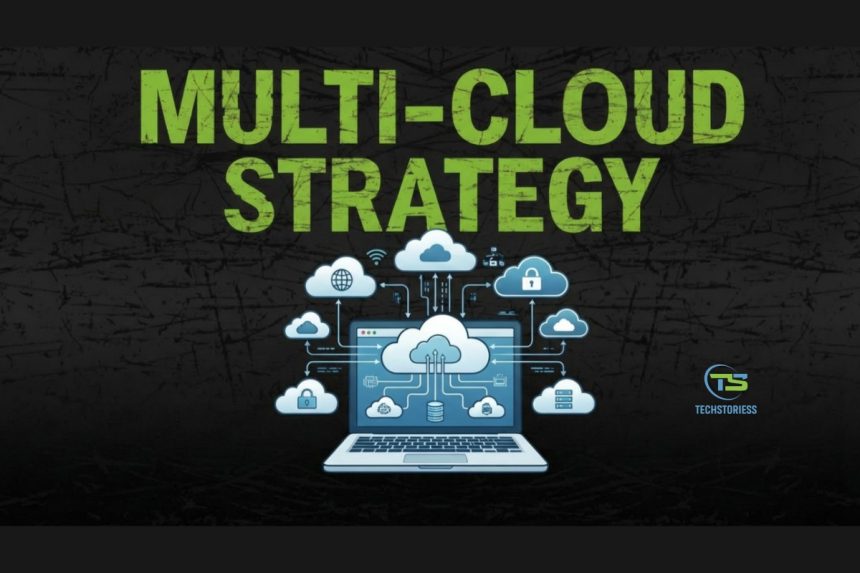
To overcome vendor lock-in, organizations need a well-planned multi-cloud strategy, running workloads across two or more cloud providers, thereby giving businesses greater control over costs, risk, and strategic flexibility.
Distributing Risk and Eliminating Single Points of Failure
By strategically spreading applications and data across multiple cloud providers such as AWS, Azure, Google Cloud, and others, organizations eliminate single points of failure. With alternative platforms available, operations can continue seamlessly on another provider if one experiences outages or disruptions. A multi-cloud approach also prevents overdependence on a single vendor by creating natural checks on pricing and service quality.
Strengthening Pricing and Contract Negotiation Power
A multi-cloud strategy strengthens negotiation power. When vendors know customers already have production workloads running elsewhere, they are more likely to offer competitive pricing and better terms. Organizations can leverage real migration capabilities rather than empty threats, enabling them to secure better pricing, improved service levels, and more favorable contract terms across providers.
Selecting Best-of-Breed Capabilities Across Providers
Enterprises are no longer forced to adopt an entire technology stack from a single provider. Instead, they can select the best services for specific use cases to maximize performance and innovation. For example, Netflix combines AWS for content delivery with Google Cloud for machine learning analytics, leveraging advanced capabilities regardless of which vendor delivers them first.
Improving Regulatory Compliance and Governance
Compliance requirements differ across regions and industries. Multi-cloud strategies allow organizations to place workloads in jurisdictions that meet regulatory needs while maintaining consistent governance across their entire infrastructure.
Designing for Cloud Portability: Reducing Vendor Lock-In by Architecture
Vendor lock-in occurs as a cumulative outcome of early architectural decisions that focus on convenience, speed, and short-term efficiency. As cloud adoption matures, organizations realize the difficulty of reversing the architecture due to costs, delays, and operational risks. To enjoy the advantages of cloud while still retaining strategic flexibility, businesses need to embed portability, governance, and data mobility into the architecture right from the beginning. The following principles outline how organizations can consciously limit dependency without sacrificing performance or scalability.
Multi-cloud adoption is the best way to mitigate vendor lock-in risks. However, multi-cloud adoption is more than just spreading operational workloads across multiple cloud vendors. To ensure ideal outcomes and benefits, organizations need to make intentional design choices, execute with clear planning, and continuously align across architecture, governance, and data.
Engineering Portability Into the Architecture from Day One
While adopting cloud platforms, businesses often assume that portability can be addressed later. Over time, applications become tightly integrated with provider-specific APIs, services, and deployment models. Extracting them then becomes a complicated process due to high costs, complex procedures, and significant time investment. Companies should therefore design portability into systems during architectural decision-making to avoid reversing core architectural decisions later.
Organizations can achieve this by standardizing application runtimes through containerization and orchestration using platforms like Kubernetes, enabling applications to run consistently across multiple cloud providers.
Repeatable and predictable deployments help reduce operational risk. Infrastructure as Code tools define environments independent of any single vendor. Abstraction layers for storage, messaging, and compute prevent direct coupling with cloud-native APIs. Achieving portability at the architectural level allows organizations to move or duplicate workloads without re-engineering the entire solution architecture.
Balancing Open Standards with Cloud-Native Convenience
Cloud platforms tightly integrate proprietary services into workloads. While efficient initially, they eventually create provider dependency. Organizations should evaluate where proprietary services are essential and where open-source alternatives offer greater flexibility.
Open-source databases, messaging systems, and monitoring tools operate across clouds. Standardized APIs preserve interoperability regardless of provider. Combining cloud-native services with open standards allows organizations to consciously accept lock-in where justified, enjoying short-term gains while maintaining long-term flexibility without irreversible dependency.
Treating Data Portability as a Core Design Principle
Migrating applications is manageable; migrating data is not. Large datasets, proprietary storage formats, and vendor-specific analytics services create lock-in due to restricted data mobility. Many organizations overlook this risk during initial cloud planning. Effective strategies prioritize data portability when designing architecture. Data stored in open or widely supported formats and regularly tested export mechanisms ensure future mobility.
To ensure data access outside the primary cloud environment, organizations implement independent backup and replication strategies. Regular migration testing helps assess cost, time, and complexity, supporting strategic decisions such as vendor exit planning and disaster recovery readiness.
Creating Unified Governance Across Disparate Clouds
Inconsistent governance is a major contributor to vendor lock-in. Managing multiple providers with different identity systems and security models creates dependency.
Organizations counter this through cloud-agnostic governance frameworks. Centralized identity management using open standards ensures consistent access policies. Uniform enforcement of security and compliance controls reduces operational friction. Periodic reviews of exit strategies ensure continued portability readiness.
Exposing and Controlling Hidden Sources of Dependency
With regular audits, organizations can identify workflows that introduce vendor dependency. Based on these insights, they can rework architectural patterns and technology choices to help teams maintain flexibility without relying exclusively on vendor-managed services that tightly integrate proprietary interfaces into core systems. This enables operational efficiency while avoiding long-term technical debt or loss of strategic flexibility.
Conclusion
Vendor lock-in manifests as a series of architectural and operational choices made with a short-term focus like convenience, speed, and cost optimization. Over time, as enterprises scale up cloud adoption, this dependency becomes deeply entrenched in core systems. Quietly, it erodes the flexibility to switch vendors, which then requires significant cost, time, and operational disruption. Organizations often realize this only when vendors increase prices or degrade service quality, at which point switching becomes unavoidable.
To overcome this challenge, organizations can adopt deliberate multi-cloud strategies. Multi-cloud emphasizes portability early, prioritizes data mobility, enforces consistent governance, and actively monitors hidden dependencies, enabling organizations to respond effectively to evolving business, technology, or regulatory requirements. To gain maximum benefits from multi-cloud adoption, organizations need to commit to a strategic, long-term approach.