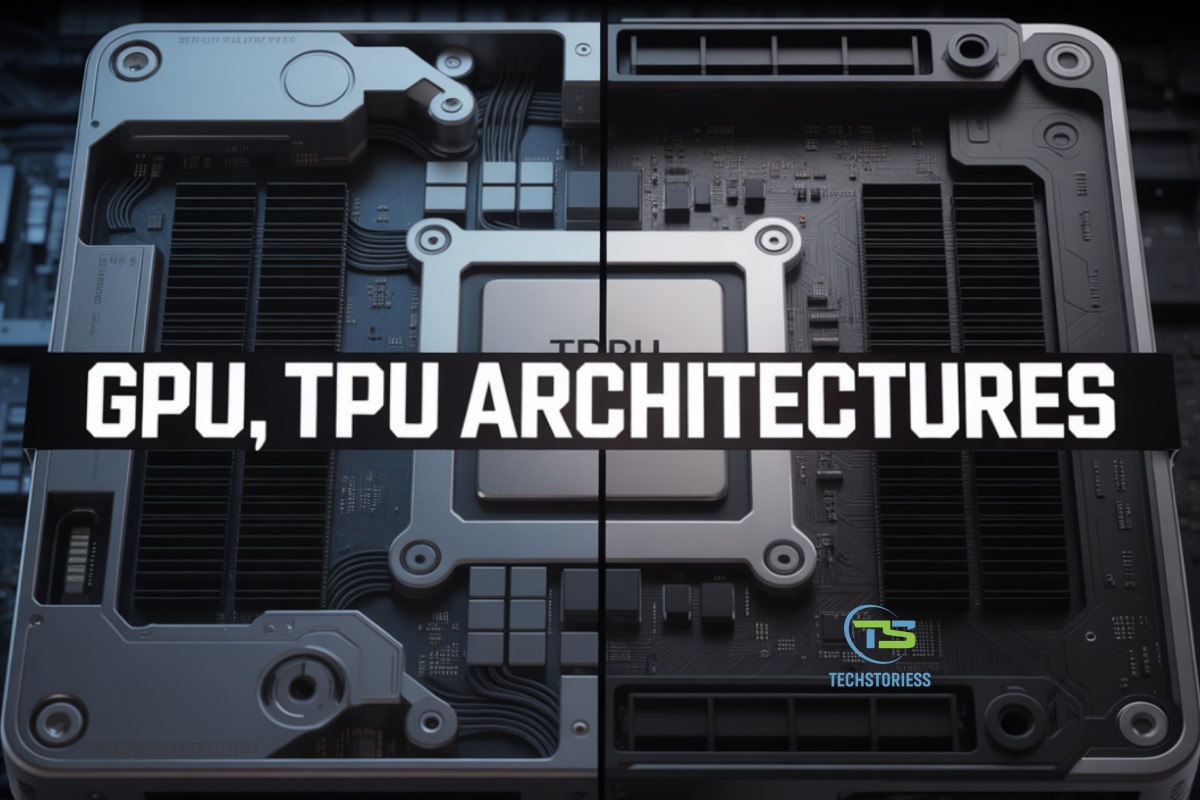



During the early phase of AI development, GPUs were at the core of innovation – powering large-scale neural network training and high-performance parallel computation. From foundational model training to early generative AI deployments, GPUs – especially from Nvidia – became the primary engines of machine intelligence. But after more than half a decade of explosive AI growth, the landscape is steadily shifting.
- The Rise of Custom AI Chips in Cloud Strategy
- The Economics Behind the Shift
- The GPU Era: How Programmable Parallelism Built Modern AI
- Why Inference Economics Changed Everything
- Why Inference-Centric Design Matters
- Custom AI Chips vs GPU 2026: Architectural Philosophies Diverge
- Ironwood TPU vs Trainium3: A Hyperscaler Showdown
- Energy-Efficient Compute: The New KPI
- The Economic Rebalancing of AI Infrastructure
- Beyond Google and AWS: The Broader Custom Silicon Race
- Strategic Outlook: The Future of Compute
- Conclusion
With rapidly growing model sizes, escalating inference demand, and tightening energy constraints, the conversation is no longer centered solely on peak performance efficiency; it now equally prioritizes economic viability, cost predictability, and energy sustainability at hyperscale.
The Rise of Custom AI Chips in Cloud Strategy
An increasing number of cloud providers are aggressively leveraging custom AI silicon to optimize inference economics and reduce infrastructure dependency on third-party GPU vendors. Purpose-built AI silicon accelerates machine learning tasks with significant efficiency. These chips, designed specifically for deep learning workloads, eliminate general-purpose circuitry and focus almost entirely on tensor operations, memory bandwidth efficiency, and interconnect optimization.
Major examples include hyperscale giants such as Google’s Google Ironwood TPU and Amazon Web Services’s AWS Trainium3. While Google continues to evolve its TPU architecture within its own ecosystem, other cloud providers increasingly frame their silicon strategy more broadly around proprietary custom AI accelerators rather than TPU-class branding.
The Economics Behind the Shift
Instead of emphasizing compute versatility, these accelerators are engineered for energy-efficient tensor processing at cloud scale. According to industry analyses, custom AI chips can reduce inference costs by roughly 40–60% compared to conventional GPU clusters – particularly under sustained, production-scale workloads where utilization is predictable and continuous.
AI economics is undergoing a structural rebalancing, with far-reaching implications for cloud strategy, sustainability targets, enterprise IT budgets, and even geopolitical semiconductor supply chains. What was once framed as a TPU vs GPU 2026 debate has now expanded into a broader strategic conversation about custom AI chips versus general-purpose GPUs – encompassing energy-efficient compute, vertical integration, supply-chain resilience, and long-term infrastructure sovereignty.
The GPU Era: How Programmable Parallelism Built Modern AI
GPUs can perform thousands of parallel instructions simultaneously, enabling them to execute large-scale matrix multiplications – the mathematical backbone of neural networks. This capability made them the uncontested choice for AI operations for more than a decade. Their dominance was further reinforced by Nvidia’s CUDA ecosystem, which created a unified and mature programming layer deeply embedded across academic research labs, AI startups, and enterprise engineering teams.
Here are the Core Factors Behind GPU Dominance in Early AI
- CUDA created a mature, unified development ecosystem.
- GPUs supported experimentation across evolving frameworks like PyTorch and TensorFlow.
- Their programmability enabled rapid model innovation.
- However, general-purpose design increases energy consumption in sustained inference workloads.
This architectural generality increases energy consumption and inflates per-token inference costs at scale, especially when workloads are repetitive, predictable, and sustained over long operational cycles.
Why Inference Economics Changed Everything
Large model training remains capital-intensive, but inference has emerged as the dominant and recurring cost driver.
Here are the key factors contributing to the high costs of inference:
- Training is capital-intensive, but inference is recurring and continuous.
- AI systems process billions of prompts and trillions of tokens annually.
- Small per-token inefficiencies compound into massive operational costs.
- At hyperscale, marginal cost differences translate into hundreds of millions in annual spend.
Here, custom silicon becomes strategically decisive. By eliminating extraneous control logic and optimizing data movement pathways between compute cores and high-bandwidth memory, custom AI chips streamline inference execution. ASICs (Application-Specific Integrated Circuits) are purpose-engineered for tensor-heavy workloads, improving throughput per watt and lowering cost per inference request.
Industry analyses consistently indicate that custom AI chips can make inference 40–60% cheaper than GPU-based clusters – particularly in steady-state, high-volume production environments where workloads are predictable and latency-sensitive. When aggregated across hyperscale cloud regions, these savings fundamentally reshape infrastructure planning and capital allocation strategies.
Why Inference-Centric Design Matters
Purpose-built tensor accelerators represent a shift from universal programmability toward workload-specific optimization.
Dedicated tensor datapaths minimize redundant compute cycles, directly lowering per-token costs in large language model deployments.
- Reduced power consumption decreases cooling requirements, enabling higher rack density and improved data center utilization efficiency.
- ASIC-level optimization significantly benefits predictable, high-volume inference workloads – particularly within vertically integrated cloud ecosystems where silicon, networking, and orchestration layers are tightly coordinated.
- Inference economics, more than raw training performance, is ultimately driving the great silicon pivot of 2026.
Custom AI Chips vs GPU 2026: Architectural Philosophies Diverge
Beyond raw speed, the custom AI chips vs GPU 2026 debate reflects fundamentally different architectural philosophies.
GPUs dynamically distribute workloads through highly programmable cores operating under a SIMT (Single Instruction, Multiple Thread) model. This flexibility enables them to support diverse and evolving workloads, but it also introduces additional control overhead and higher energy consumption per operation.
In contrast, custom AI chips are typically designed around dedicated tensor pipelines and systolic-array-inspired architectures optimized for dense matrix multiplications. These structured compute pipelines pass data efficiently between processing elements, minimizing memory movement while maximizing arithmetic throughput – particularly for transformer-based workloads.
Within this broader category, Google’s Ironwood TPU represents one of the most mature implementations of systolic-array-based acceleration. It can scale across thousands of interconnected chips in pod configurations, enabling exaflop-scale AI processing with optimized inter-chip communication.
Meanwhile, Amazon Web Services’s Trainium3 follows a similar efficiency-driven philosophy, though it is positioned as a proprietary custom AI accelerator rather than a TPU-class architecture. Trainium3 emphasizes deep integration with the Neuron SDK and AWS’s infrastructure fabric to streamline deployment within its cloud ecosystem.
Because these architectures are purpose-built for transformer-heavy workloads, they significantly reduce energy waste and improve silicon utilization. As a result, hyperscalers can deliver lower-cost inference services while simultaneously improving sustainability metrics and operational predictability.
Ironwood TPU vs Trainium3: A Hyperscaler Showdown
The competition between Ironwood TPU and Trainium3 reflects hyperscalers’ expanding control over AI infrastructure.
Ironwood TPU represents Google’s long-term investment in vertically integrated compute. Its architecture emphasizes high-bandwidth memory, advanced interconnect topology, and workload-specific optimization to efficiently scale large transformer models across distributed pods within Google Cloud.
Similarly, Amazon is reducing dependency on third-party GPU vendors by expanding deployment of Trainium3 across AWS regions. By designing proprietary silicon, AWS strengthens supply-chain resilience, optimizes cost structures, improves energy efficiency, and reinforces tighter cloud ecosystem integration.
Both chips are engineered around energy-efficient compute principles and optimized for AI workloads operating continuously at cloud scale. Rather than competing solely on peak benchmark numbers, they compete on total cost of ownership, performance-per-watt, and ecosystem integration depth.
Comparative Strategic Advantages
- Ironwood TPU leverages Google Cloud’s mature TPU ecosystem, improving distributed inference scaling efficiency within Google’s vertically integrated stack.
- Trainium3 tightly integrates with AWS networking, storage, and orchestration layers, enabling enterprises to optimize end-to-end AI infrastructure performance.
- When deployed for sustained inference-heavy workloads, both accelerators significantly reduce operational expenditure compared to GPU clusters.
- Each hyperscaler reinforces ecosystem stickiness by aligning proprietary silicon with software tooling and managed AI services.
Energy-Efficient Compute: The New KPI
Energy efficiency has evolved from a peripheral engineering metric to a primary strategic KPI. AI data centers are among the fastest-growing electricity consumers globally, attracting regulatory scrutiny and increasing sustainability accountability. Performance-per-watt has consequently become a boardroom-level concern rather than a purely technical benchmark.
Custom silicon directly addresses this challenge by eliminating unnecessary general-purpose logic and optimizing transistor allocation specifically for tensor operations. Lower power draw reduces electricity costs and cooling requirements. At hyperscale, these savings translate into billions of dollars in reduced capital and operational expenditure while materially improving ESG reporting metrics.
This emphasis on energy-efficient compute defines the silicon pivot of 2026. Infrastructure decisions are now shaped as much by sustainability mandates and grid capacity constraints as by benchmark performance.
The silicon pivot underway in 2026 is not merely a hardware upgrade – it represents a structural shift in AI economics, infrastructure strategy, and global technology competition.
The Economic Rebalancing of AI Infrastructure
With persistent supply constraints in advanced GPU manufacturing and continued concentration of high-end chip production within a limited number of fabrication ecosystems, this silicon shift is reshaping competitive dynamics. It reduces hyperscalers’ exposure to third-party GPU supply volatility and pricing pressures. Developing proprietary chips enables cloud providers to secure critical supply chains while strengthening pricing leverage and long-term infrastructure control.
For enterprises, the decision increasingly extends beyond simple GPU-versus-accelerator comparisons. It now involves strategic evaluation of long-term ecosystem alignment, vendor lock-in considerations, workload portability, regulatory exposure, and infrastructure flexibility across multi-cloud environments.
This shift does not eliminate GPUs as general-purpose compute platforms. Instead, it accelerates hybrid infrastructure strategies. Organizations continue to experiment and prototype models on GPUs due to their mature tooling ecosystems and broad framework compatibility. However, they increasingly deploy efficiency-optimized custom accelerators for production-scale inference workloads to reduce operational expenditure and improve performance-per-watt economics.
Enterprise Decision Factors
- The flexibility of GPUs benefits short-term experimental AI initiatives, particularly where heterogeneous workloads and evolving architectures dominate.
- Long-term production inference systems often benefit from favorable economic structures enabled by custom silicon optimized for sustained tensor processing.
- Hybrid infrastructure models allow enterprises to balance innovation agility with disciplined operational cost control.
- Infrastructure planning now increasingly incorporates energy budgets and long-term sustainability commitments.
Beyond Google and AWS: The Broader Custom Silicon Race
Following Google and Amazon Web Services, Microsoft has entered the arena with its in-house AI accelerator, Maia. Other digital platform leaders are advancing similar initiatives. Meta continues developing its MTIA chips to power internal AI workloads, while Apple refines its Neural Engine to optimize on-device AI processing.
This trend signals a broader structural transition: hyperscalers and platform providers seek deeper control over compute economics, performance optimization, and supply-chain resilience. Silicon is no longer merely infrastructure – it has become a strategic lever.
The shift toward vertically integrated AI hardware weakens the structural dominance of general-purpose GPUs and accelerates specialization across AI workloads. Over time, this may fragment AI infrastructure into optimized, ecosystem-specific stacks that reinforce competitive moats and reshape enterprise cloud strategies.
Strategic Outlook: The Future of Compute
The great silicon pivot of 2026 is not about replacing GPUs outright. They remain indispensable for research, experimentation, simulation workloads, and heterogeneous compute environments. However, the structural shift toward specialization is unmistakable.
Enterprises are reconsidering infrastructure assumptions driven by inference economics, sustainability mandates, and vertically integrated cloud strategies. Custom AI chips optimize cost structures, enhance energy efficiency, and align hyperscalers more tightly with enterprise AI roadmaps.
Looking ahead, the future points toward modular, hybrid compute architectures – GPUs providing flexibility and rapid experimentation, while custom silicon delivers cost-effective, energy-efficient scale for sustained production inference.
Key Insights
- AI infrastructure strategy will increasingly revolve around workload-specific optimization rather than universal hardware standardization.
- Under growing regulatory and sustainability scrutiny, energy-efficient compute will define the long-term viability of AI platforms.
- The custom AI chips vs GPU 2026 debate reflects a broader transition toward specialized, vertically integrated AI ecosystems with tighter hardware-software co-design.
Conclusion
Custom AI chips versus GPUs represent more than a hardware comparison. They signal a deeper transformation in how intelligence is engineered, delivered, and monetized at scale.
Ironwood TPU and Trainium3 illustrate a future in which hyperscalers control not only cloud platforms but also the silicon foundations beneath them. Custom accelerators substantially reduce inference costs while delivering measurable gains in energy efficiency and infrastructure predictability.
The great silicon pivot of 2026 marks a recalibration of AI’s economic engine. Understanding these shifts will enable organizations to align infrastructure decisions with workload realities, sustainability objectives, and long-term competitive positioning – defining the next era of scalable and economically sustainable artificial intelligence.